Quasy is an anti-collision system powered by AI and quantum-ready computing — it tracks your fleet, forecasts conjunctions days ahead, and simulates the fuel-optimal move that avoids them.
Watch near-Earth space fill from the first satellite in 1957 to today. Every dot is something a spacecraft can hit — and the sky is only getting busier.
Sources: ESA Space Environment Report 2025 & ESA MASTER-8 model (2026 reference); launch forecast, US GAO.
Over 1.2 million fragments larger than 1 cm are already up there — any one of them can destroy a satellite. Active debris removal isn't a reality yet, so operations have to shift from reactive to predictive.
Operators wait for a conjunction alert, then scramble a manual response — slow, labour-intensive, and expensive. It doesn't scale to a sky with tens of thousands of objects in it.
Quasy forecasts the behaviour of objects in near-Earth space, flags the risks that matter days ahead, and recommends the safest, most fuel-efficient move — before the window closes.
A Quantum-Ready Smart Collision Avoidance System. Every curve on the map is an orbit — where two cross is a potential collision. Quasy models each satellite's safety zone against every debris harmful zone, forecasts the conjunctions that breach the threshold, and simulates the AI-optimal maneuver that avoids them with the least fuel. Here is the working concept, one screen at a time.
Track every object you fly — Sentinel, GSAT, GIOVE and their neighbours — on one map, with a forecasted-events feed that flags collisions days before they happen.
 Quantum-Ready Smart Collision Avoidance System

| Time | Event Type | Object #1 | Object #2 |
|---|---|---|---|
| 19 Apr 2022 · 10:02:23 | Planned maneuver | Sentinel 2A | — |
| 23 Apr 2022 · 00:01:12 | Collision Detected | Giove A | Starlink-2061 |
| 27 Apr 2022 · 23:54:10 | Collision Detected | CZ-4 DEB | Sentinel 2A |
| 1 May 2022 · 17:23:08 | Planned maneuver | Sentinel 3 | — |
| 2 May 2022 · 07:13:54 | Collision Detected | Sentinel 4 | Iridium 111 |
| 2 May 2022 · 16:20:22 | Collision Detected | GSAT 0213 | SL-16 DEB |
| 6 May 2022 · 11:43:18 | Collision Detected | Sentinel 2A | Starlink-1370 |
| 9 May 2022 · 11:23:29 | New object | GSAT 0205 | — |
Quantum-Ready Smart Collision Avoidance System| Time | Event Type | Object |
|---|---|---|
| 19 Apr 2022 · 10:02:23 | Planned maneuver | — |
| 6 May 2022 · 11:43:18 | Collision (high prob.) | Starlink-1370 |
Open any object for its live orbital elements — apogee, perigee, inclination — the predicted conjunction zone, and a what-if simulator with fuel analytics.
Compare your current plan with the AI-optimal orbit: here, 8 maneuvers and 97 L of fuel drop to 4 maneuvers and 62 L — at 97% accuracy.
Quantum-Ready Smart Collision Avoidance System
Quantum-Ready Smart Collision Avoidance System| Name | Type | Country | Alerts | |
|---|---|---|---|---|
| GSATO 205 | satellite | United Kingdom | No alerts set | |
| GSATO 209 | satellite | United Kingdom | Alerts on: SMS, EMAIL | |
| GIOVE A | satellite | Italy | Alerts on: EMAIL | |
| GSATO 213 | satellite | United Kingdom | No alerts set | |
| SENTINEL 2A | satellite | France | No alerts set | |
| SENTINEL 3 | satellite | France | Alerts on: SMS, EMAIL | |
| SENTINEL 4 | satellite | France | Alerts on: SMS, EMAIL | |
| CZ-4 DEB | debris | USA | Alerts on: EMAIL |
Register and manage every asset you fly, integrated with EU SST — filter by type, country or constellation, and set SMS or email alerts per object.
Concept preview — screens from the Quasy tool in development. Object names and figures shown are illustrative.
Quasy fuses the tracking feeds, models where every object will be, and — only when a real risk crosses the threshold — computes the safest, most fuel-efficient maneuver.
EU SST plus a network of radars, telescopes and laser-ranging stations build one consolidated picture — debris orbits, satellite orbits, and the history of past moves and collisions.
Quasy computes each satellite's safety zone and each debris object's harmful zone, and keeps the object-tracking model current.
Is a safety zone breached by one or more harmful zones beyond a set threshold? If not, Quasy keeps monitoring — no noise.
When it is, a quantum-ready engine and AI compute the collision probability — factoring future launches and third-party datasets — in near real time.
Quantum-Ready Orbit Simulation™It suggests the optimal maneuver with a transparent rationale — the safest path, for the least fuel — and exports the detailed report.
The operator performs the maneuver; the tracking and simulation models update, and Quasy returns to monitoring.
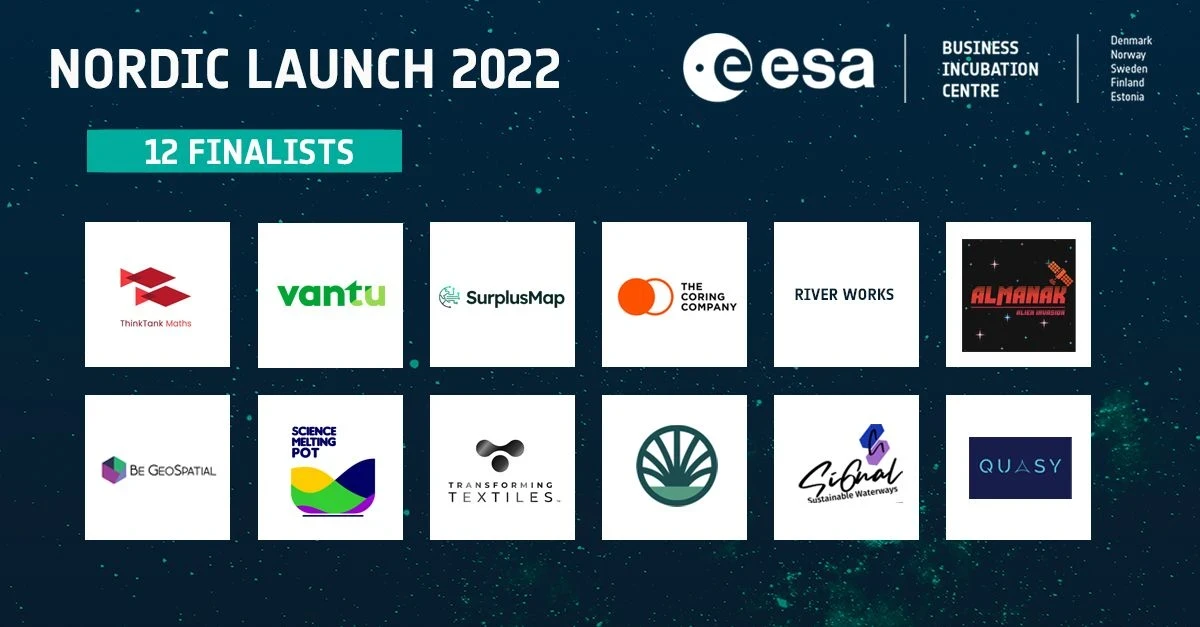
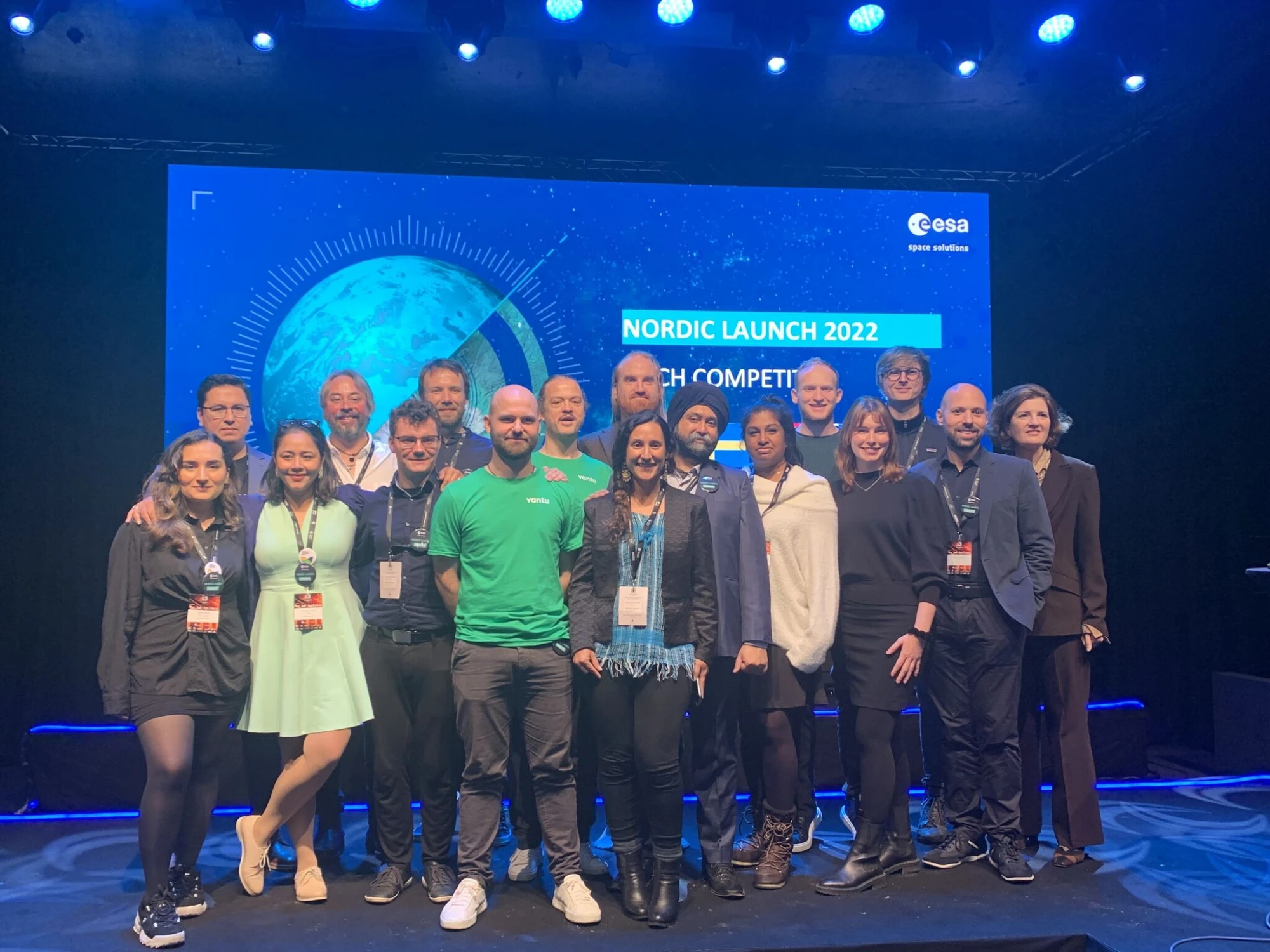
Quasy Tech was selected as a finalist in the ESA Business Incubation Centre "Nordic Launch 2022" competition, and secured funding through the EU / EUSPA space competition — backing from the people who run Europe's space programme.
Three gains from one predictive core — read the sky, protect the asset, and fly it for less.
Real-time insight into the trajectory, velocity and collision risk of every tracked object — so you can read the situation and decide, fast.
Predictive manoeuvre recommendations reduce the risk of collision and protect your assets — and the investment riding on them.
Fewer wasted manoeuvres, less fuel burned, less downtime — accurate simulations help you get more out of every asset you fly.
Near-Earth space is a complex, highly-interactive system. Quasy's quantum-ready engine models millions of interactions in parallel — quantum-inspired today, built to run on quantum hardware as it matures — for a sharper read on risk than classical methods alone.
Machine-learning models trained on satellite-tracking and space-weather data find the patterns, predict behaviour, and translate it into an action you can take — the safest, most fuel-efficient move.
It runs on EU SST feeds and a sensor network — radars, telescopes and laser-ranging stations — fused with future-launch forecasts and third-party datasets. That's what puts Quasy alone in the predictive & simulating corner, where others only track, or only react.
Faster, parallel, real-time orbital intelligence — several times quicker than reacting after the fact.
Back in 2022, The Adjacent Possible spotted collision avoidance as defensible, AI-native IP and built Quasy on an AI + quantum-ready engine — an ESA BIC Nordic Launch finalist, EU-funded, when the commercial field barely existed. Four years on it's crowded with well-funded AI players — the clearest proof the call was right.
None of them is quantum — Quasy is the one built AI + quantum-ready from the start, an angle the field is only just beginning to explore. Current conjunction-assessment / collision-avoidance & STM field, 2025–26; debris-removal firms and defence primes sit in adjacent categories, and EU SST is a data feed Quasy integrates.
Talk to the team about predictive collision avoidance for your fleet, your mission, or your research.
For satellite operators, launchers, space agencies, insurers and research centres.
Or write to [email protected]